
Share this article
The fastest way to find your roof’s age is to pull the last roofing permit from your county records, since it lists the install date and the contractor who did the work. If no permit turns up, your home’s closing documents, seller disclosure, or the manufacturer date codes on the shingle wrappers can fill in the gap. In most cases, one of these sources gives you a reliable number within an afternoon!
This guide shows you exactly how to find the age of your roof using the most trustworthy sources first. You’ll learn how to search Clay, Duval, and Alachua county permit portals, where to look in your closing paperwork, how to reach a previous owner or builder, how to read manufacturer date codes, how a four-point or wind mitigation report helps, and which visual clues you can spot from the ground. We’ll also explain why the number matters and how to document it. Read on!
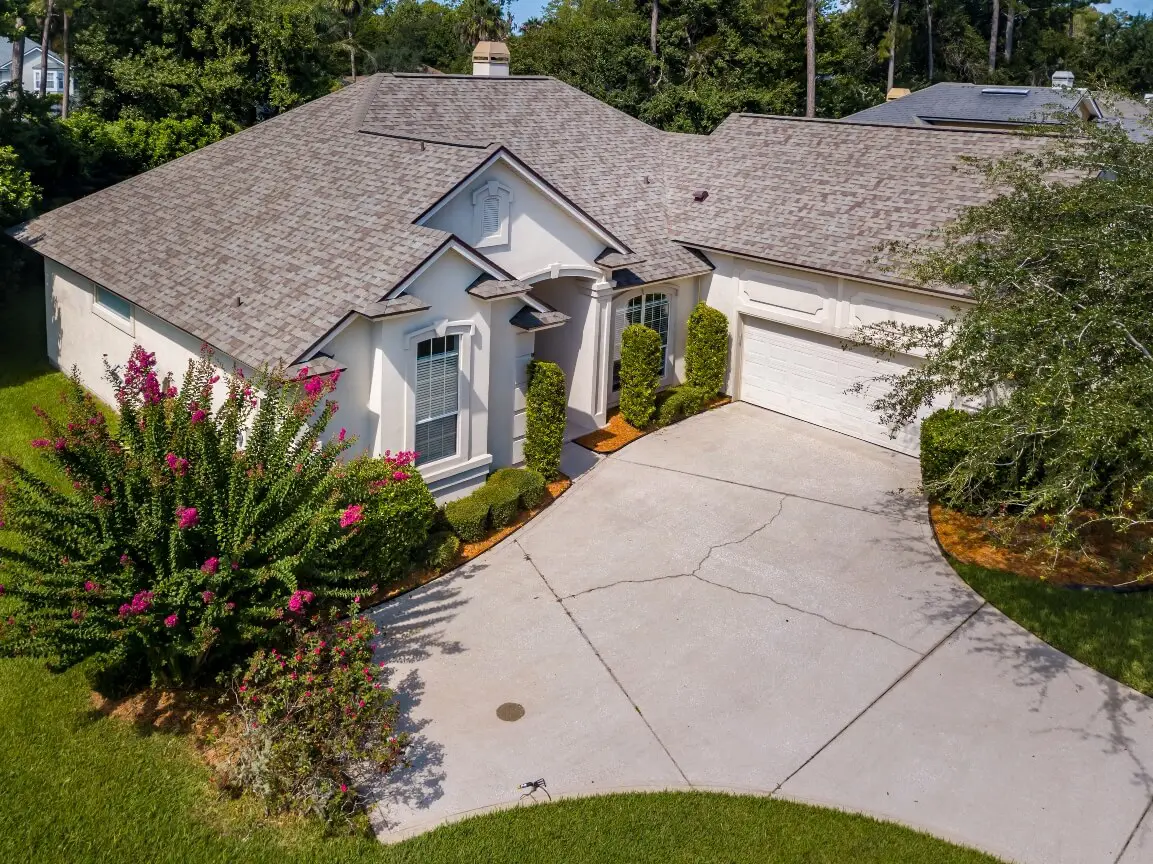
How to Find Out Your Roof's Age
There’s a clear pecking order here, moving from the most reliable records to rough estimates. Start at the top and stop once you find a solid, dated source. Here’s how to find out roof age in Florida:
County Permit Records
Permit records are the gold standard because a roof replacement in Florida requires a permit with an inspection date. Search for roof age permit records through your county’s online portal by property address. In Clay County, use the Building Division’s permit search on the county website. In Duval County, check the City of Jacksonville’s permit lookup. In Alachua County, use the county’s online permitting portal or the City of Gainesville portal if your home sits inside city limits. Look for the most recent roofing permit and note the final inspection date.
Closing Documents and Seller Disclosure
If you bought the home in the last several years, your closing packet often holds the answer. Sellers in Florida must disclose known material facts, so the seller’s disclosure may state the roof’s age or last replacement. Check the inspection report, the seller’s property disclosure, and any receipts passed along at closing. These documents help you confirm the answer to “how old is my roof” without guesswork.
Previous Owner or Builder
When paperwork comes up short, go straight to the source. A quick call or message to the previous owner can pin down the year the roof went on, and they may still have receipts. If your home is newer, the original builder or their records can tell you the install date. This works well for homes that have never changed hands.
Manufacturer Date Codes and Wrapper Stamps
Every bundle of shingles carries a production code, and leftover wrappers in the attic or garage often survive for years. During professional inspections, a roofer can read these date codes and any stamps to estimate when the roofing material was made. Production dates usually land within months of the install, so this method gets you close even when records are missing.
Four-Point or Wind Mitigation Inspection Report
If your home has ever had a four-point or wind mitigation inspection, that report likely lists the roof’s age or install year. Insurers often require these reports for older homes, so check your policy file or ask your agent. Wind mitigation reports also note roof covering type and permit dates, which makes them a handy shortcut.
Visual Age Indicators from the Ground
You can gather clues from the driveway without ever getting near the roof. Curling or cupping shingle edges, bald spots where granules have worn away, dark streaks, and sagging lines all point to an older, tired roof. Granules collecting in gutters or at downspout splash blocks are another sign of age. These signs won’t give you an exact year, but they tell you whether a closer look is overdue.
Why Your Roof’s Age Matters
Roof age drives a lot of decisions, and the biggest one is your insurance. Florida carriers lean heavily on roof age when they decide whether to write or renew a policy, and many flag asphalt shingle roofs once they pass 15 to 20 years. When you know the number, you can have a straight conversation with your insurance company about coverage and whether a repair or replacement is the smarter move. Determining roof age for insurance also helps you avoid surprises at renewal time.
The age number also shapes your replacement planning. A roof nearing the end of its service life needs a budget and a timeline, not a last-minute scramble after the first leak. Knowing the age lets you plan the project on your terms, compare quotes from qualified roofing contractors, and choose materials without pressure. This is where knowing exactly how to find the age of the roof pays off, since it turns a vague worry into a clear plan.
Documenting the Age Once You Know It
Once you’ve nailed down the year, save the proof in one place. Keep a copy of the permit record, the closing disclosure, the inspection report, or the photos of the date codes in a folder you can find fast. A written roof condition report with photos and an estimated remaining service life adds another dated record that underwriters and future buyers value. Store it digitally so it’s easy to share with your agent whenever coverage questions come up.
Good documentation supports your policy file, speeds up any future home sale, and gives you a baseline to track how your roof holds up over time. If you ever replace the roof, register the manufacturer warranty and keep the new permit, because those become your fresh proof of age. A little organizing now saves a lot of stress later.
Know Your Roof's Age With Help From KayCo Roofing
Figuring out a roof’s age can feel like detective work, and that’s exactly where a trusted local team earns its keep. KayCo Roofing has spent more than two decades helping Northeast and North Central Florida homeowners understand their roofs and make confident choices. Our free roof inspections come with a clear, written condition report, complete with photos and an honest estimate of remaining service life.
We know Florida roofs, Florida weather, and the local permit landscape across Clay, Duval, and Alachua counties. That local expertise means the guidance you get is accurate, fair, and built around your home, not a sales script. Whether your roof is fresh or well past its prime, we’ll give you the facts you need to plan your next step. Book your free roof inspection with KayCo Roofing today and get a written condition report you can rely on.
Frequently Asked Questions
What if I can't find any records and the roof shows no obvious wear?
Yes. An experienced roofer can often narrow down the age by examining the shingle product line, fastening method, and underlayment type, since these details changed significantly over the decades.
Can a roofer tell roof age without permits?
Yes. A seasoned roofing contractor can estimate age by examining the shingle product line, underlayment type, fastening method, and flashing details, since roofing materials and installation standards changed noticeably across different decades.
Does roof age affect my home's resale value?
Yes. A roof nearing the end of its lifespan can lower a home’s appraised value or trigger repair credits during negotiation. Buyers and their inspectors will ask, so having documented proof of your roof’s age and condition puts you in a stronger position at closing.
Does homeowners insurance require proof of roof age?
Some Florida insurers will ask for a four-point inspection or a dated condition report before they bind or renew a policy, especially on roofs older than 15 years. Having documented proof ready can prevent delays or gaps in coverage.
What should I do if two sources give me different roof ages?
Cross-reference the dates and default to the permit record, since it carries an official inspection stamp. If the gap is significant (five or more years), flag it for your insurer and have a licensed roofer inspect the roof in person to determine which date is more accurate.